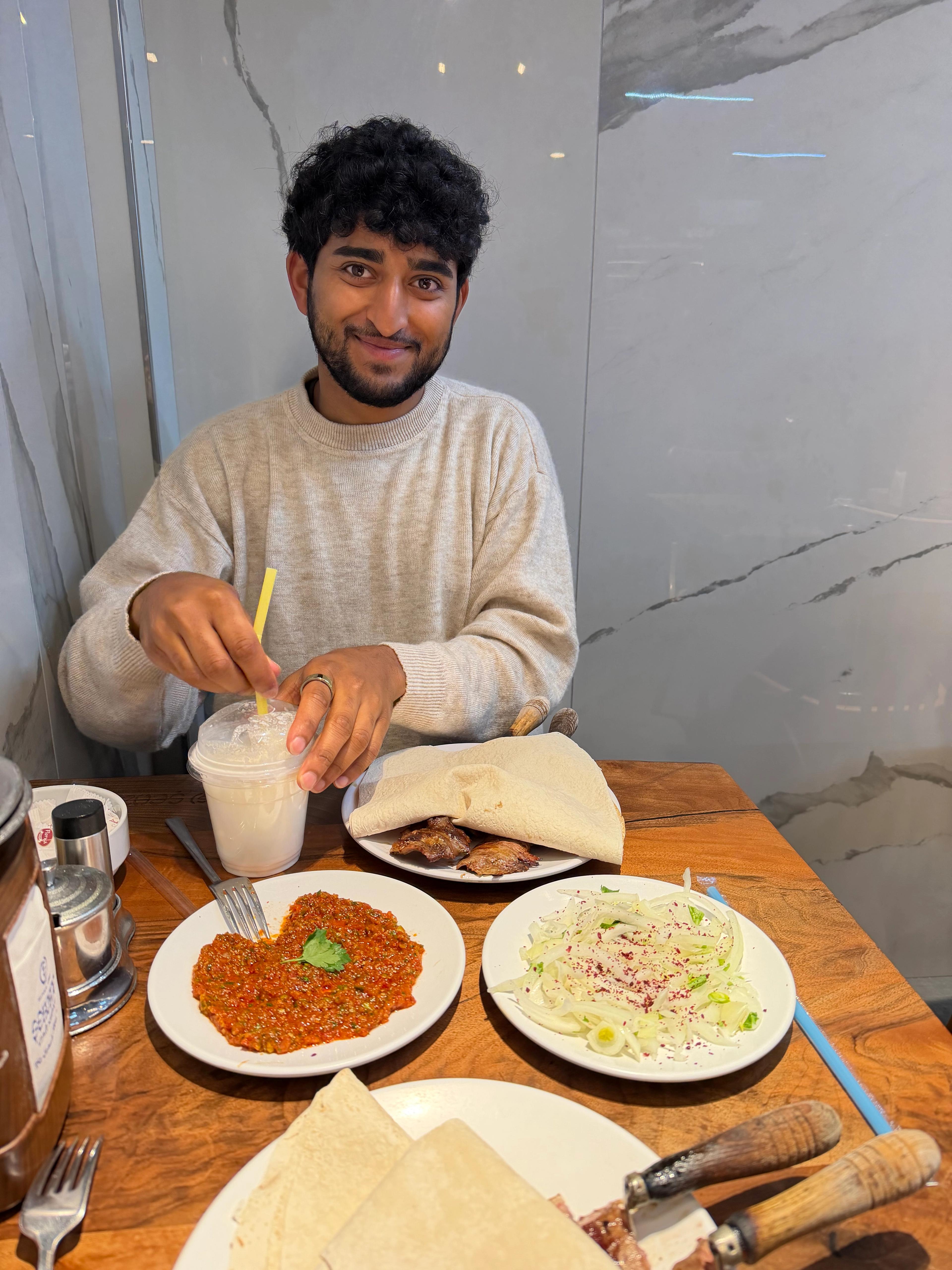
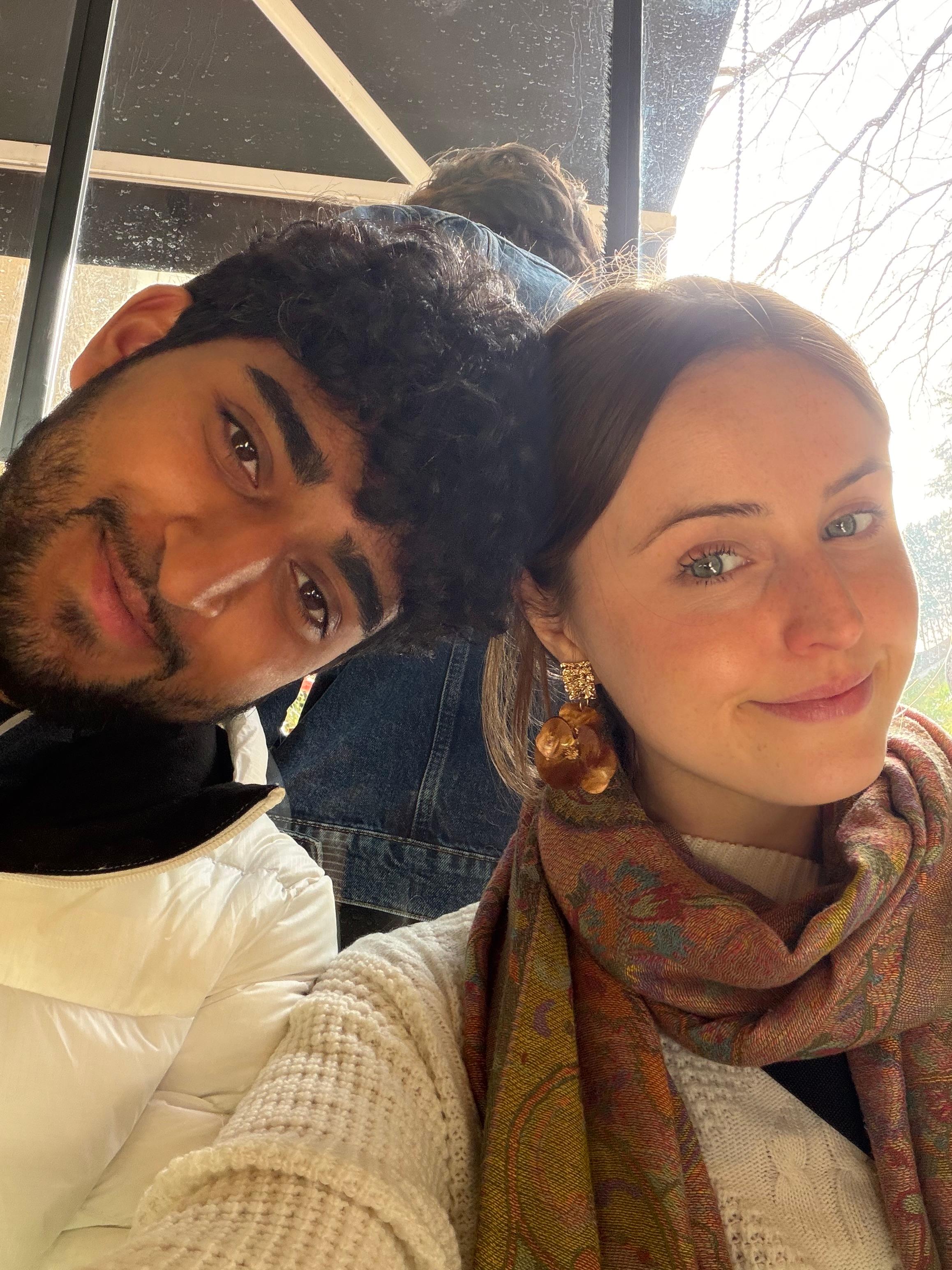
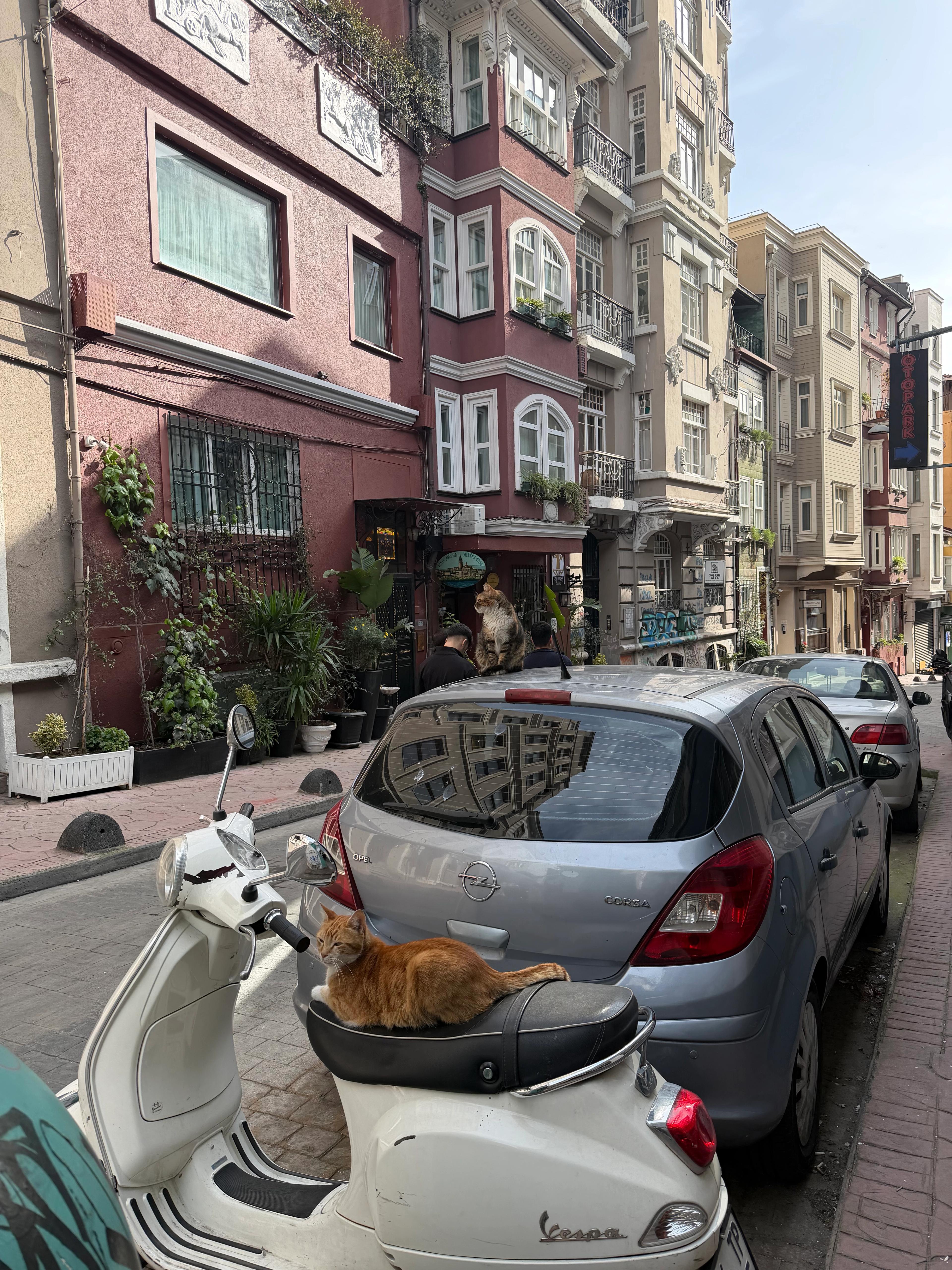
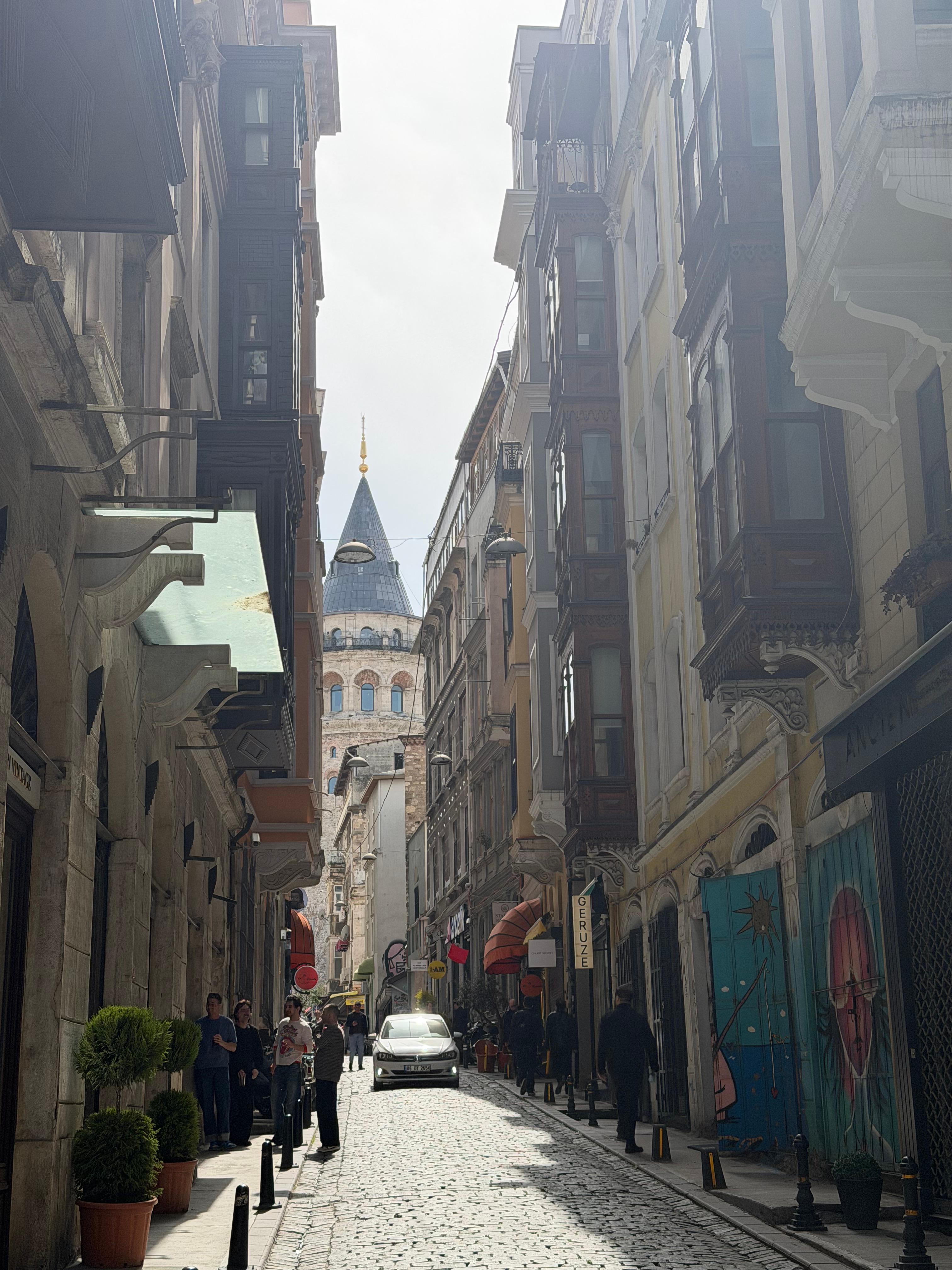
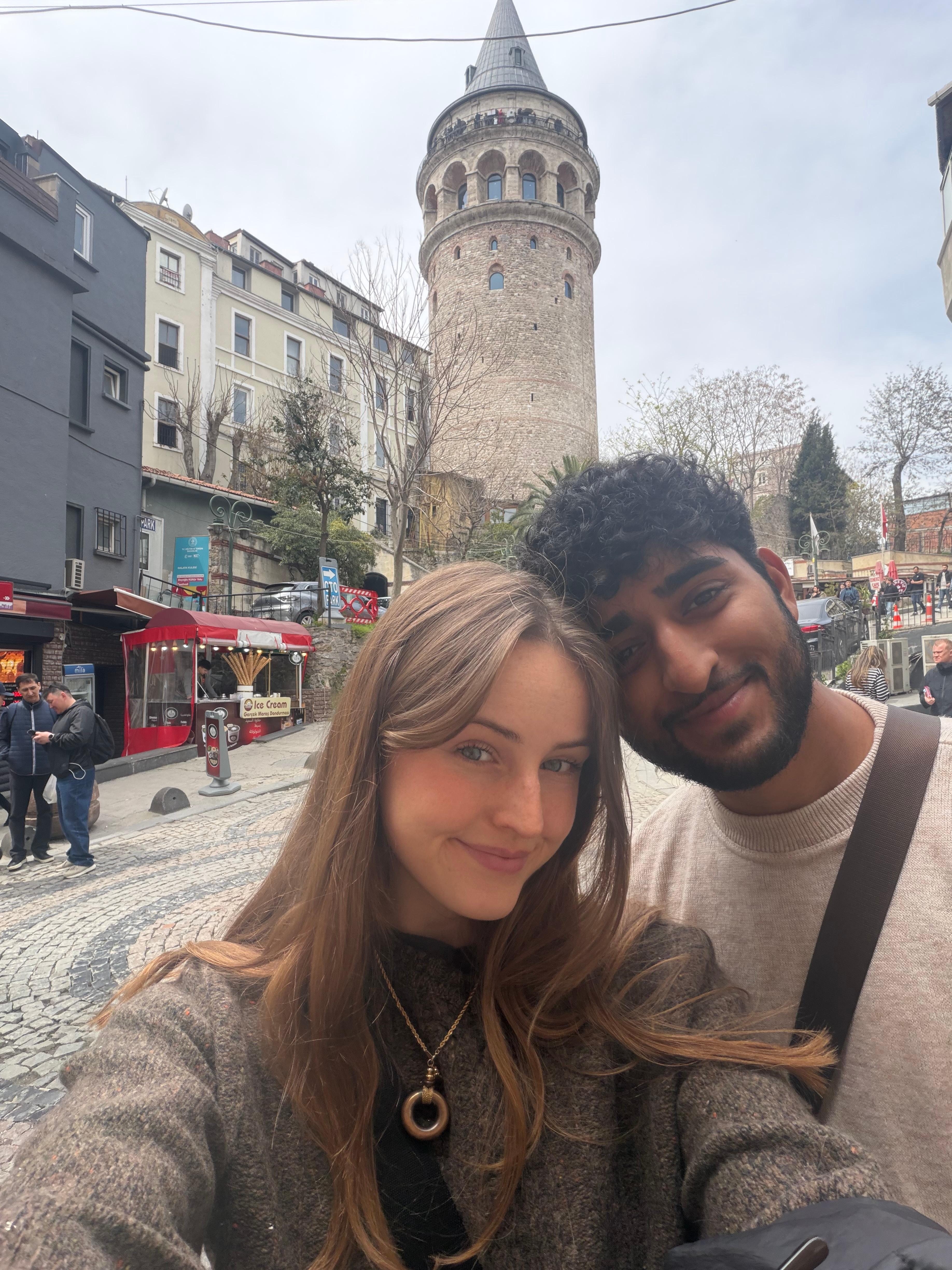
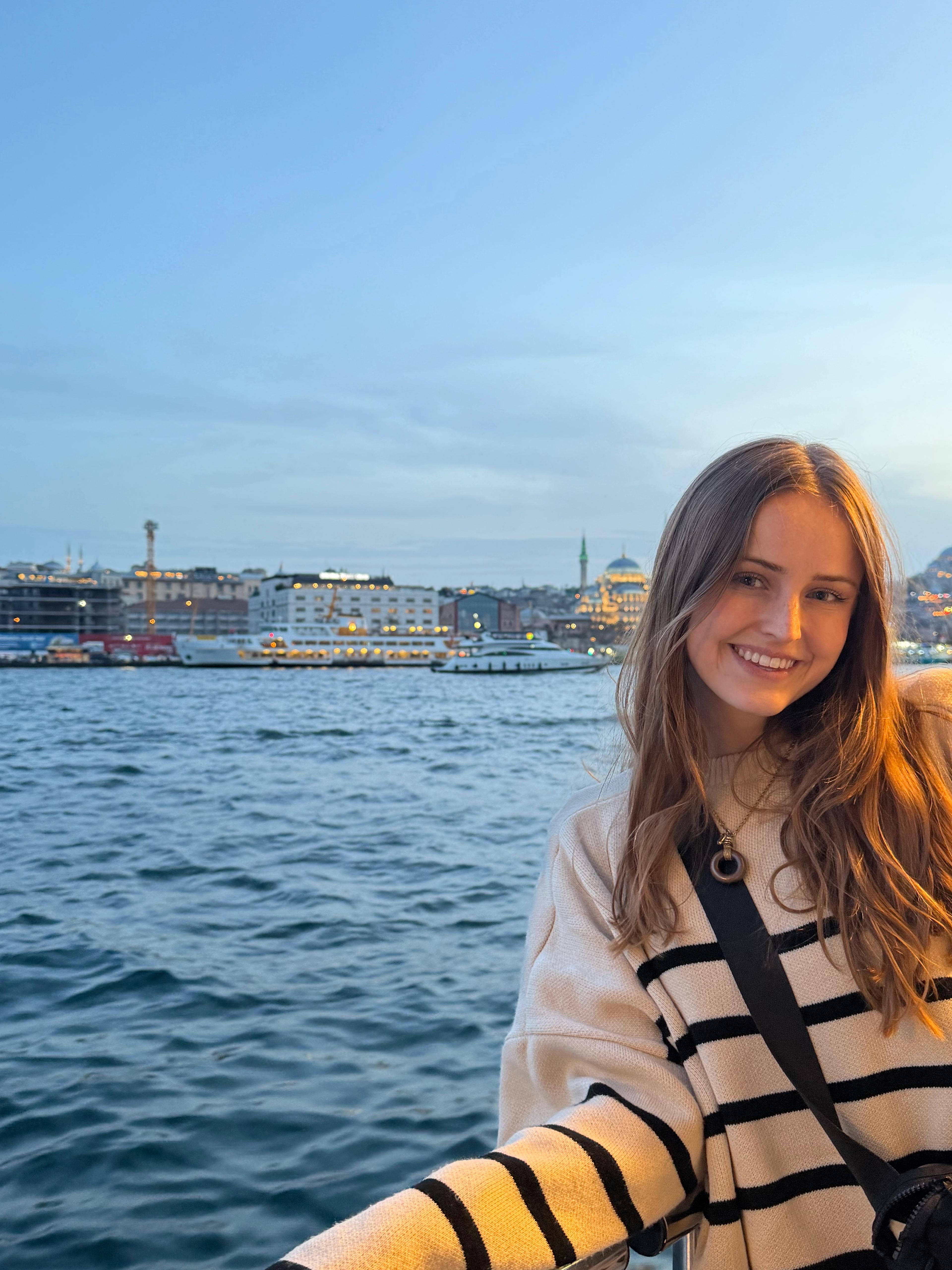
There’s no denying that Jovan and I are certified fatasses. We think about food a lot, talk about food a lot, and enjoy food a lot. Honestly I can attribute at least 50% of my motivation to travel comes from my desire to enjoy food in different countries. I feel my soul light up when I get to try something I’ve never heard of before. Or, maybe it’s even something I’ve tried in the US, but nothing compares to the quality and authenticity experienced when eating a dish in its home country. Using what’s locally available, from produce to spices, food traditions are created. Each time I’m invited to explore these traditions through a bite of food, I feel my worldview expand as my tastebuds explode.
For this reason, we are so excited to be in Turkey.
Preparing ourselves for how good we think Turkish food will be made our disappointment for our Nepal plans falling through short lived. I took a class on Turkish history in college. One of those random gen-ed’s you pick out because you hear it’s an easy A and you need to fulfill your credit hours. To my surprise, I actually enjoyed the class. My teacher was from Turkey and shared his passion of the country by walking us through Turkish history, food, music, films, and customs. By the end of the semester, my mind was filled with the rich history of the Ottoman and Byzantine empires, the knowledge of how seriously Turks take their breakfasts, and the strong desire to visit Istanbul - a gateway of the Silk Road and a trading mecca where two continents converge.
After landing in Istanbul and figuring out the metro system, we walked 30 minutes to our hostel. During the walk, we observed our surroundings. A bustling city outfitted with many dessert (baklava and lokum) shops and restaurants, but also many consumption-oriented shops lined the streets to our surprise. We noticed mass produced Chinese goods almost everywhere we looked. Fake designer branded bags, inexpensive clothing, shoes, and souvenirs repeating from one storefront to the next. We became curious about it being the opposite of our expectations of an old historic city. Attributing it to being likely a more touristic area, we maintained our excitement to explore the rest of the city. We couldn’t help but notice the many simit stands - a “Turkish bagel” very popular bagel adjacent bread coated with sesame seeds. Fueling up on new street food before even putting our bags down, we made our way to our hostel.

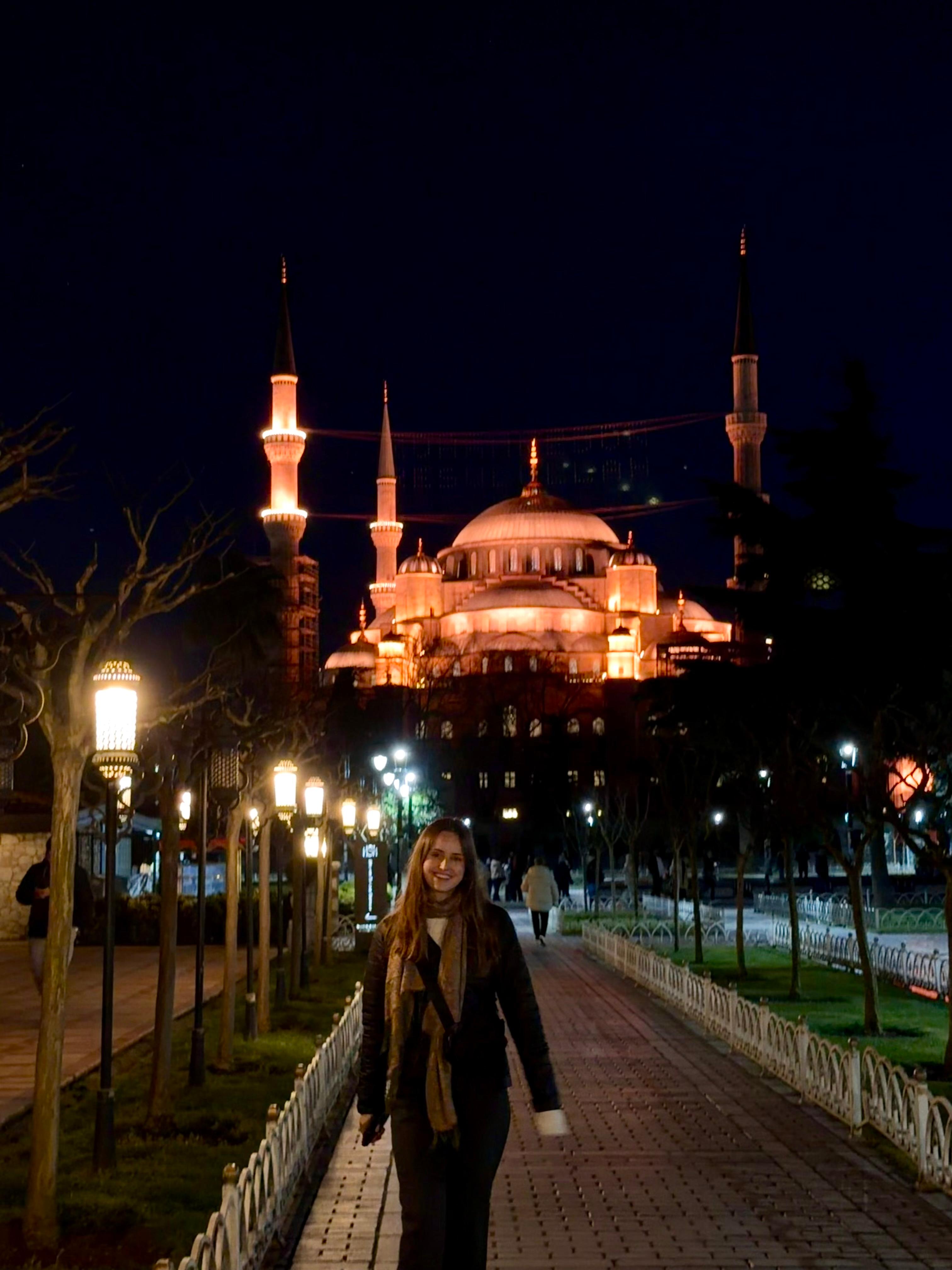
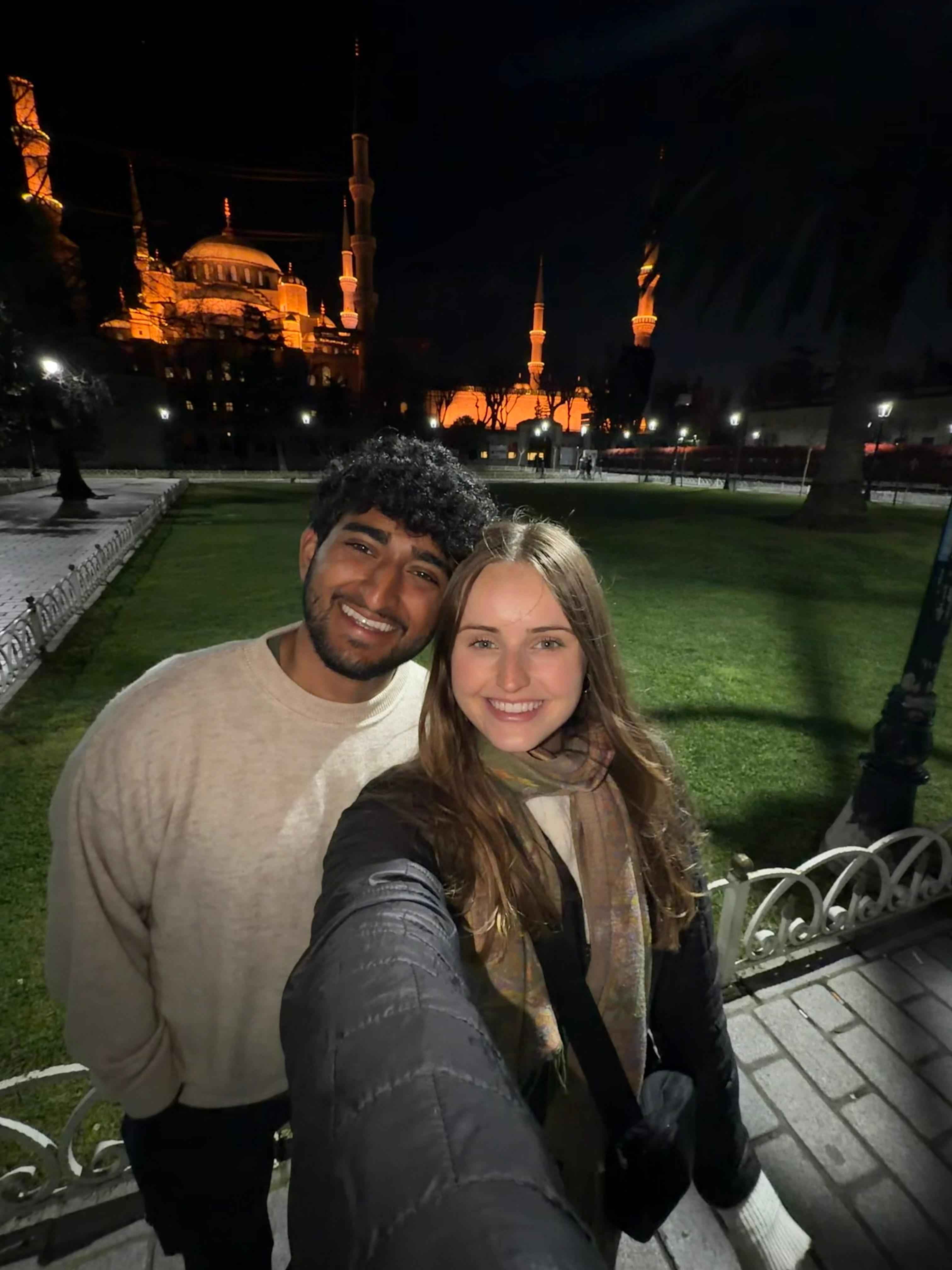
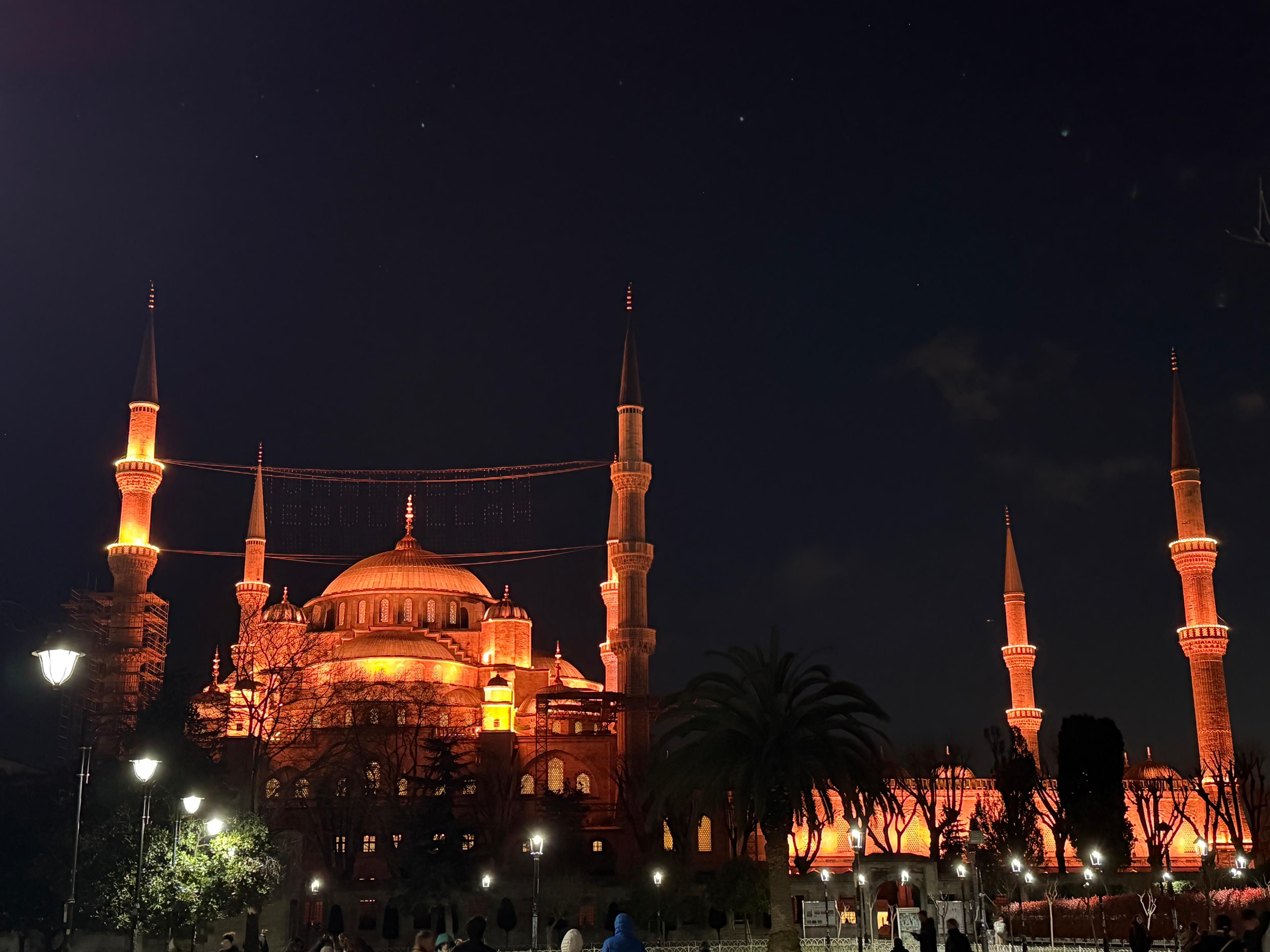
We were only minutes away from the most iconic landmarks of Istanbul - Hahia Sophia, Sultan Ahmed, Topkapi, and the Basilica Cistern. Visiting Sultan Ahmed mosque at night was our favorite. The streets were quiet, the crowds of people gone for the night. Glowing a warm orange against the dark blue night sky, the massive structure felt dreamy, and we felt lucky to be in love walking the streets of Istanbul at night.
Sadly, we learned in the morning that the entry prices for most of these iconic sites were around $50 per person. As magnificent as I’m sure they are, we couldn’t justify the price. During our 3 hour walking tour, we began to understand why. Turkey has struggled with significant economic instability during the past 5 years. Since 2021, most everything here has gotten significantly more expensive, with inflation numbers nearing 80% while the Turkish Lira has sharply declined in value.
Suddenly, things started to make more sense- the higher than expected food prices, prevalence of cheap goods, and cost of attractions. Current prices are sometimes 10x or more the prices of just a few years ago. Although eating out would still be less than a meal in the US, we began to understand that we’d need to be more selective in how we spend our money here.
There are many pros that come along with having no real plan, and no agenda. We were already feeling the lightness of it here - the freedom to stay and go as we please. But, we were also feeling the downside of having a lack of a plan. With a little more pre-planning, we might’ve been more informed about the economic instability the country is facing. We had a moment of hesitation, feeling unsure given the expense if this is the right time to be here. Expensive destinations could always wait, we were seeking a grittier experience, more aligned to long term backpacking.
But that hesitation didn’t last. The more we explored, the more the city pulled us in. We found our favorite neighborhoods and food, and were treated more than once to the hospitable çay (tea) culture. We got used to our big Turkish breakfast buffets filled with cucumbers, tomatoes, cheese, olives, eggs, and savory pastries.
We started to wonder though if it would be less expensive outside of Istanbul. We heard mixed accounts, but kept the idea in mind. We weren’t ready to leave Istanbul quite yet, actually quite the opposite. On day 4, we extended our stay by 3 more days, feeling like there was still much more to explore.
With each day the city grew outside of our initial impressions. Every Saturday, there is a covered outdoor flea market with hundreds of vendors selling second hand items from jewelry and clothes to trinkets, electronics, antiques, and most anything you can think of. We spent hours here blending in with all the locals spending the afternoon bargaining and trading goods. My favorite were the tables filled with piles and piles of jewelry. It felt like a treasure hunt to sort through. I walked away with a couple new jewelry pieces and we got some old cassettes. Wrapped up with how old and cool everything seemed, we even debated buying this old tv but decided against it:

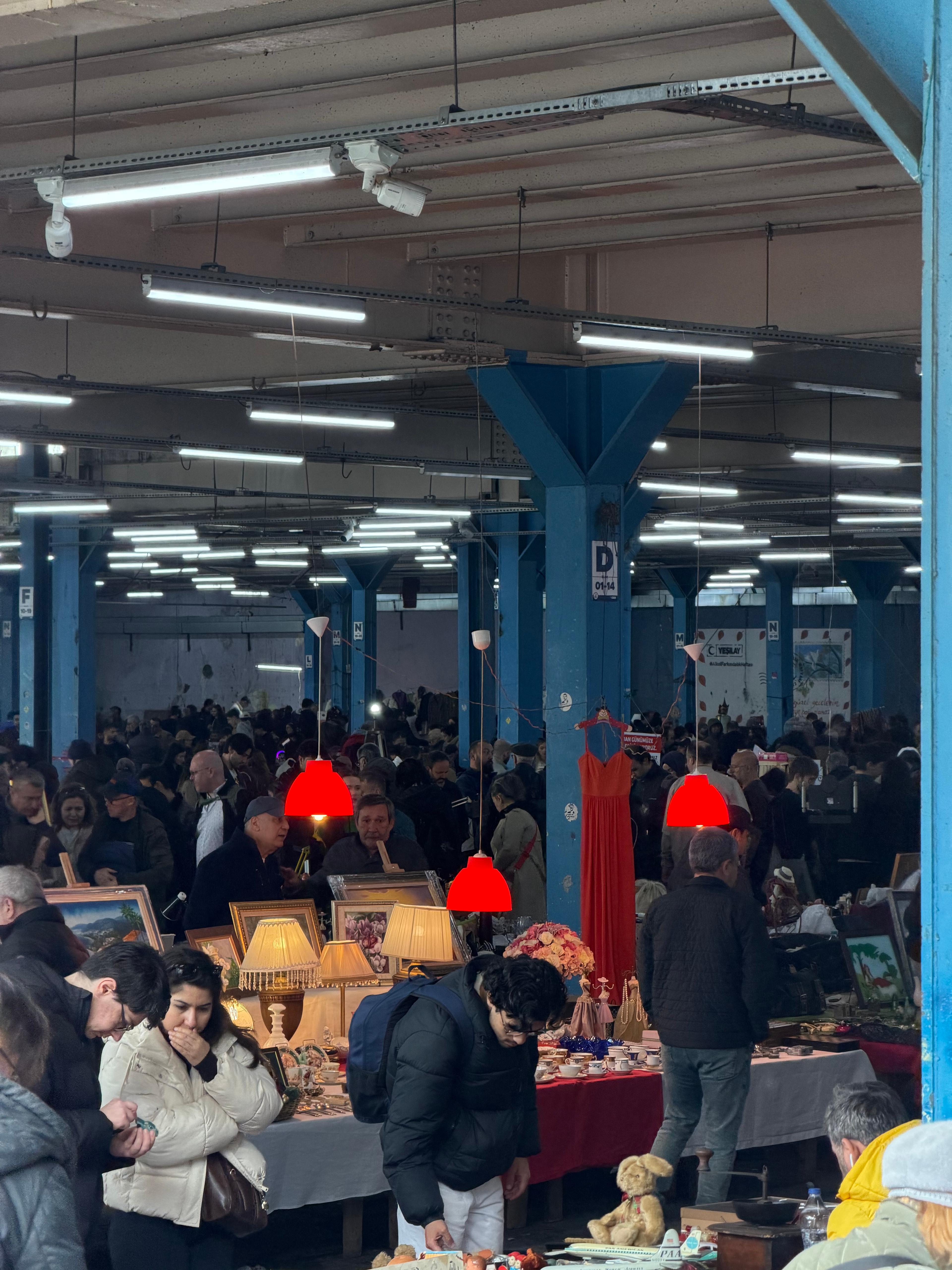
It might sound silly, but it was one of our favorite days. We loved seeing how much some of the vintage items here varied from what we see at home. It was also fun to be participating in an activity that’s popular in every day life here. After a few hours, we needed some fuel- a bathroom and food break. I’m only including the bathroom story here because after 5 weeks in Portugal, I forgot about the toilet differences in a lot of counties. First, you almost always have to pay for any public bathroom. Secondly, you better hope your knees are good because here’s what a common toilet looks like:

There was only one food option being made at the flea market, and we’d come to learn that it’s everywhere here. Lucky for us, because we love it :) the dish is called Gözleme. We sat down at a table and watched the Turkish aunts (teyzes) in a line - one making dough, one rolling it out with a long thin rolling pin, another preparing the stuffings, and the other rolling it onto a hot griddle. Spinach and cheese and meat/potato fillings are our go tos here :)

Our most memorable gözleme eating experience was at a tiny restaurant that only served two dishes, gözleme and Manti. Manti is another dish we’ve come to love - dumplings served with yogurt and tomato sauce. The restaurant had only 4 tables and felt more like eating at a family’s home. Two sisters and their mom prepared all of the dishes, and you saw them cooking right in front of you. One was rolling out the gözleme to order, the other hand pressing thousands of little manti dumplings. We’ve learned that manti is incredibly popular here, with many grocery stores we’ve been to having a special Manti section for a more processed convenient option.

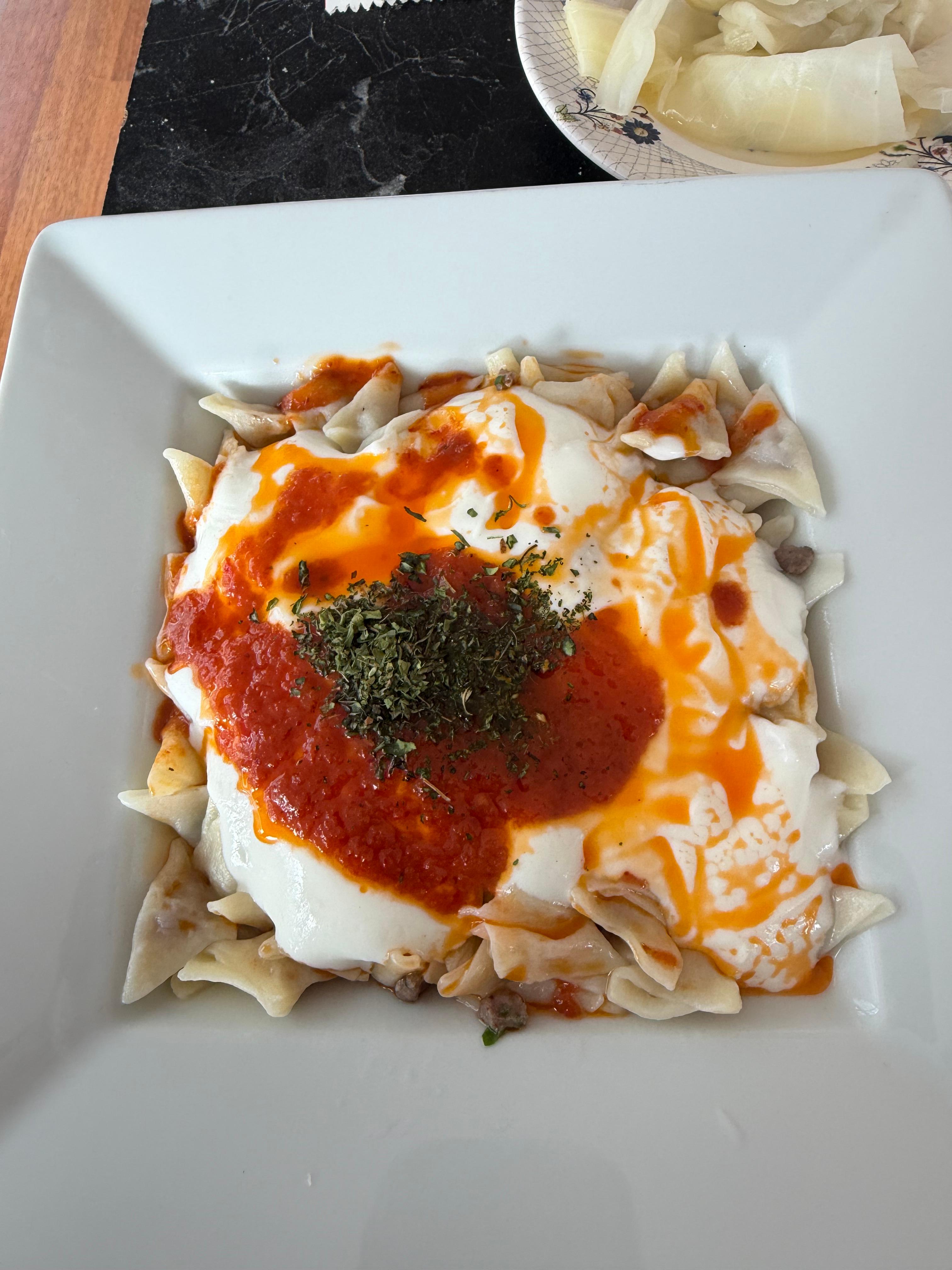

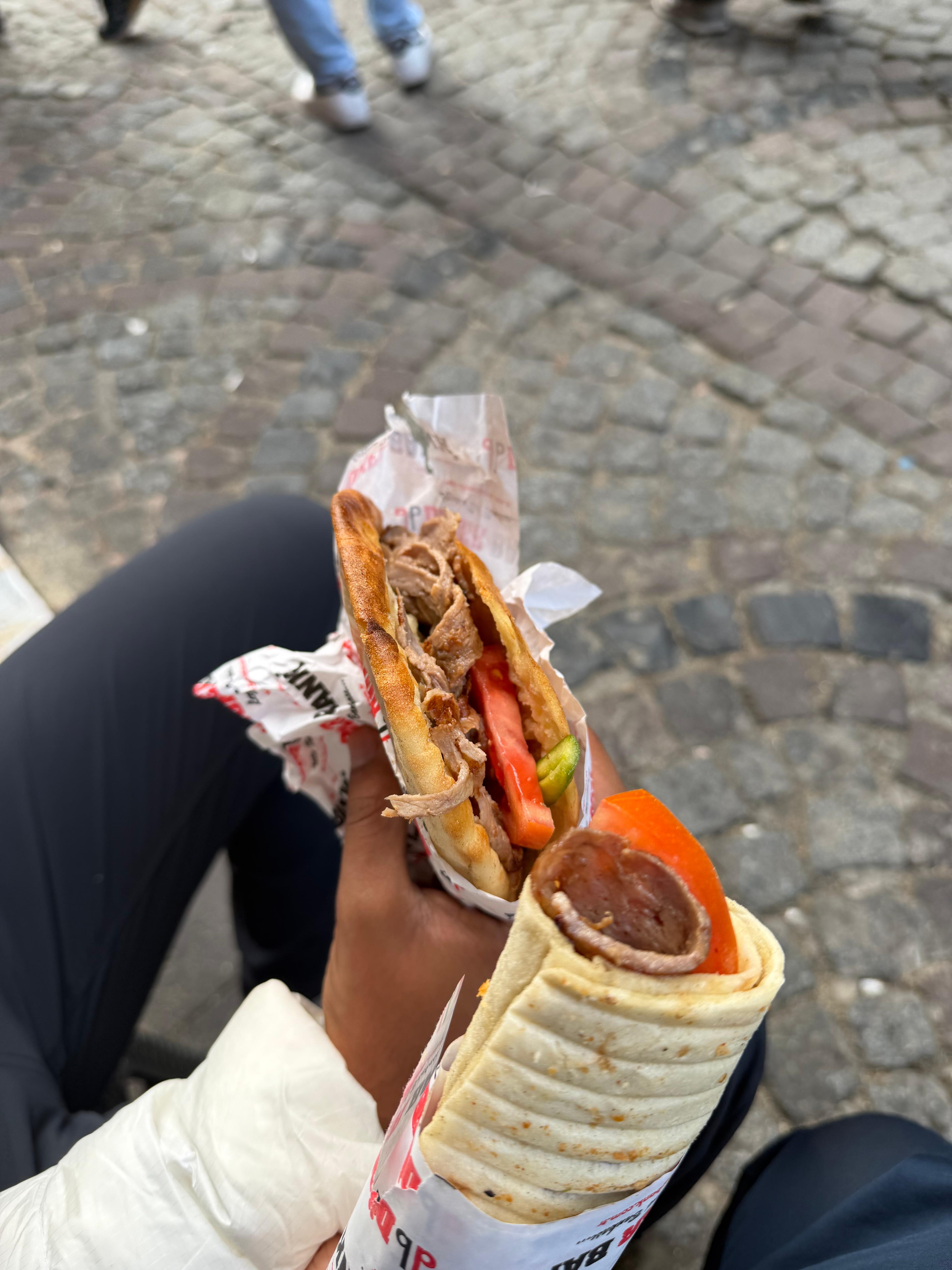
It’s fair to say we’ve been spoiled by our food experiences here. The food is just as good as we expected. Thousands of juicy döner spots, kofta, lentil soups, fresh cucumbers and tomato with dill, lokum, baklava, ayran, Manti, çay, nettle soup, mezze veggie dishes, and so much more.

I can’t capture our week in Istanbul without mentioning two key experiences that everyone visiting must try - 1) visiting the grand bazaar 2) hammam experience
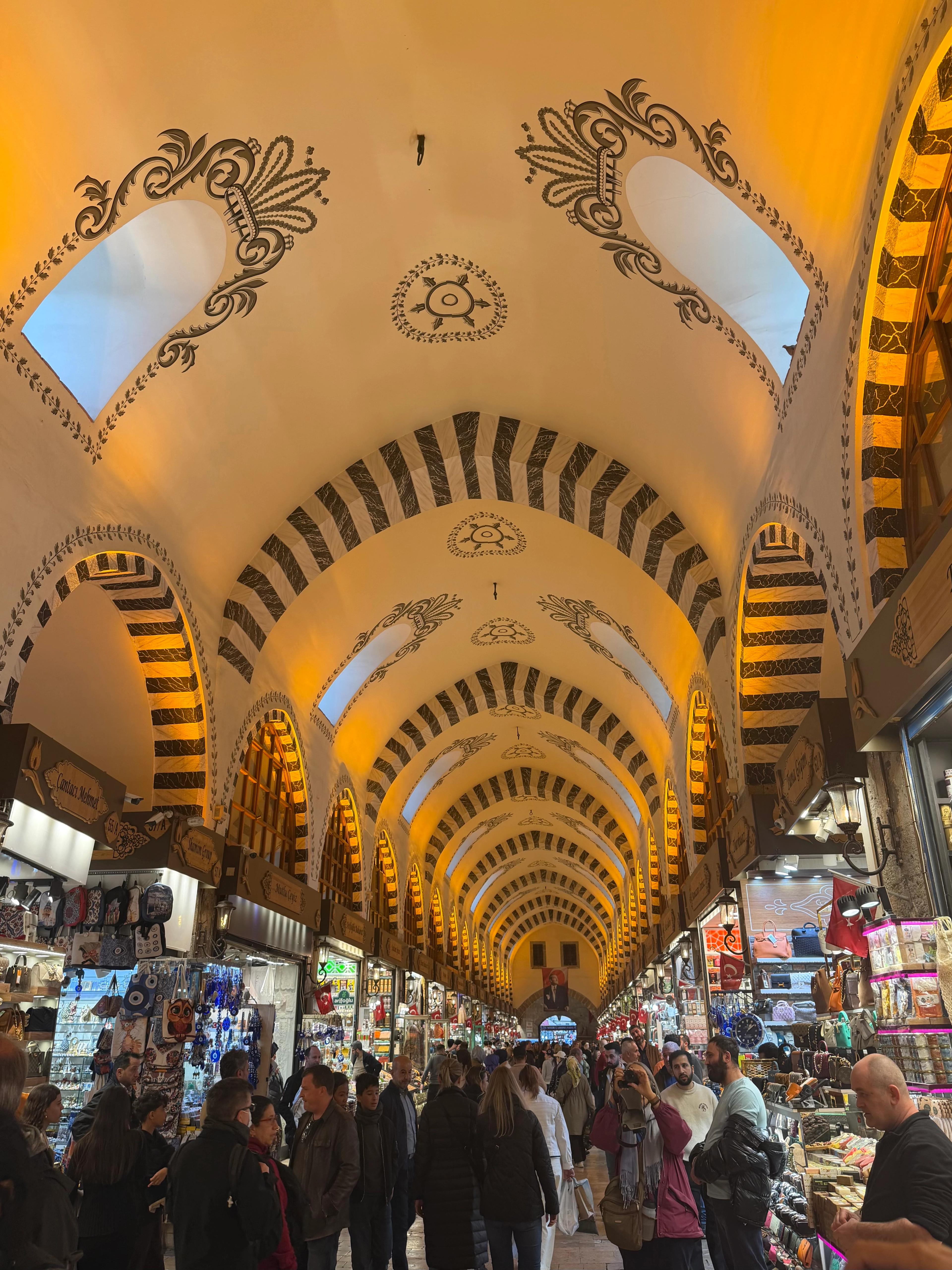
The grand bazaar is a massive indoor market that’s over 500 years old and contains thousands of stalls. It’s home to where a lot of locals go to buy spices and every day items, though nowadays it’s also frequented by tourists. And just as prices in Turkey have increased, it’s important to keep in mind that shop owners make sure the “tourist tax” keeps up for (or outpaces for the most oblivious) foreigners. Nevertheless, it’s a rich historic center of Turkish history and daily life that’s worth strolling & shopping at - if not for buying, then just for the aromatic smells of spices, tea, and lokum.
Another historic tradition here are hammams, also known as Turkish bathhouses. For hundreds of years, Turks used these as social gathering places. The first step is to sweat in the sauna / steam room, for about 30 minutes. Next, you’re taken to a room usually entirely made out of marble, where you’re sat on a marble slab and clouds of foam bubbles surround you. You’re vigorously scrubbed and exfoliated until you’re red all over. Many joke that it’s the cleanest you’ll ever feel in your life. Afterwards though not traditionally, many modern hammams also offer massages. After our hammam experience, we walked home squeaky clean like a baby wrapped in a warm towel.
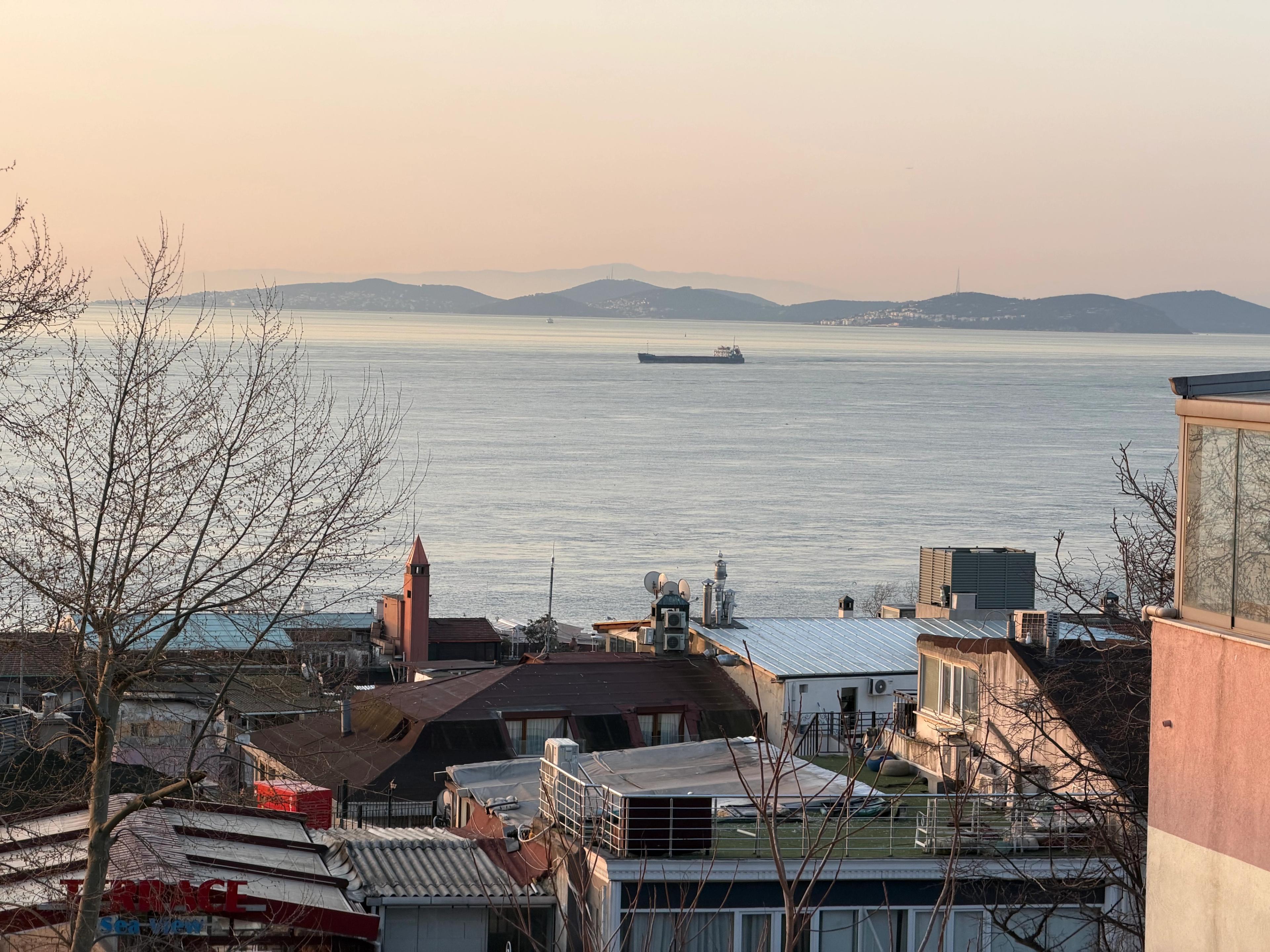
The chilly and windy mid-April Istanbul weather has gotten to us, and we’re ready for some sun. We’re leaving now to go down South! Just a couple days ago, we messaged a host on workaway and coordinated a volunteer opportunity to work on his property, a food forest. We’re hoping to experience some culture through our local host, meet new friends, and be closer to nature at a slower pace.
Gallery