Morocco Food Summary
An exploration of my favorite meals eaten in Morocco & traditional dishes
I want the final post of each country to be a food summary. Food is such a huge element of travel for me - it’s one of my favorite ways to explore culture. The local spices, flavors, and preparations all heavily impacted by the region and its history is something I want to always remember. I didn’t get this idea until halfway through Morocco so I don’t have as many photos but nevertheless I think I have a grasp of the popular cuisine of the regions I visited. Here is my breakdown:
BREAKFAST
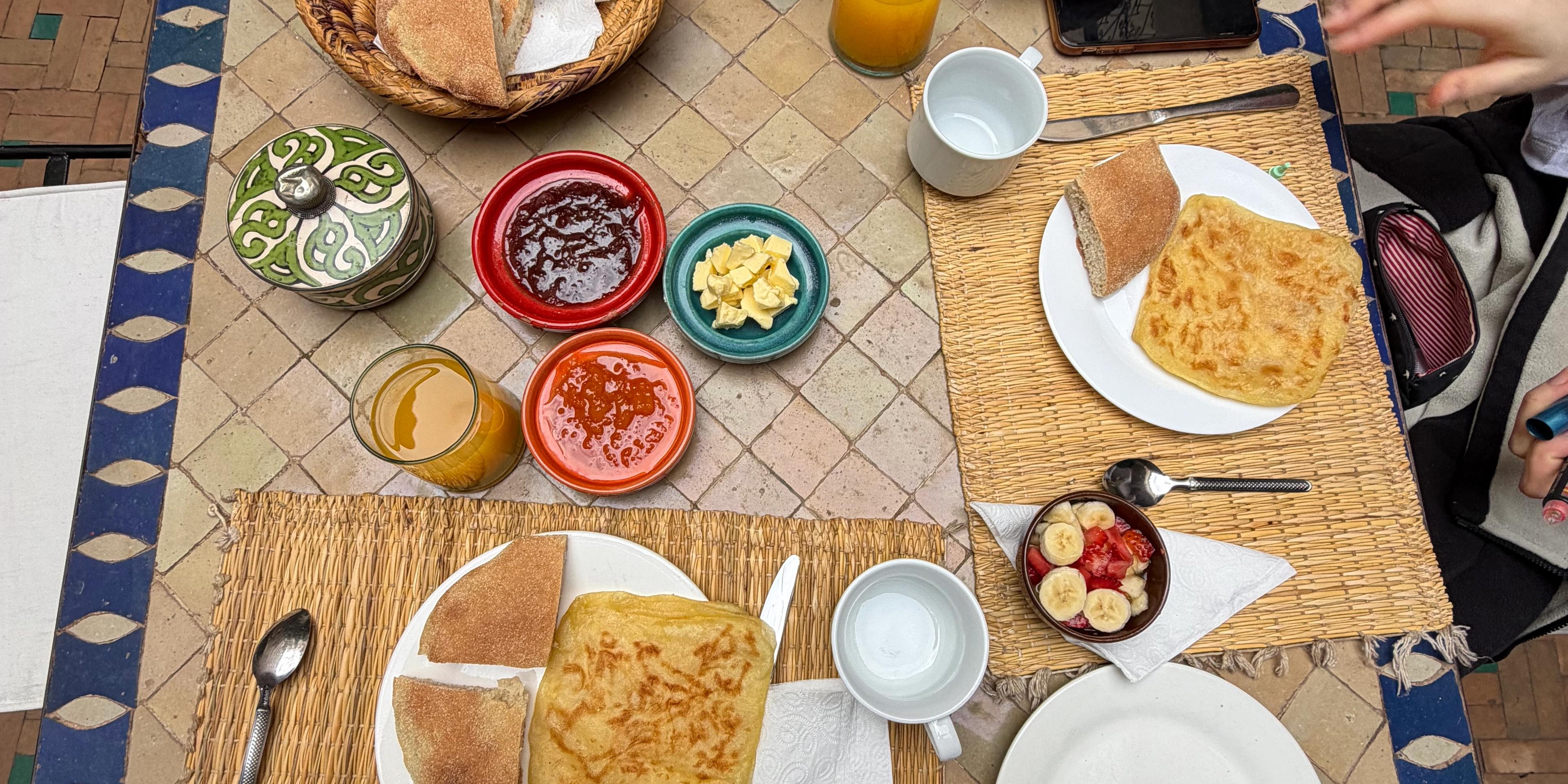
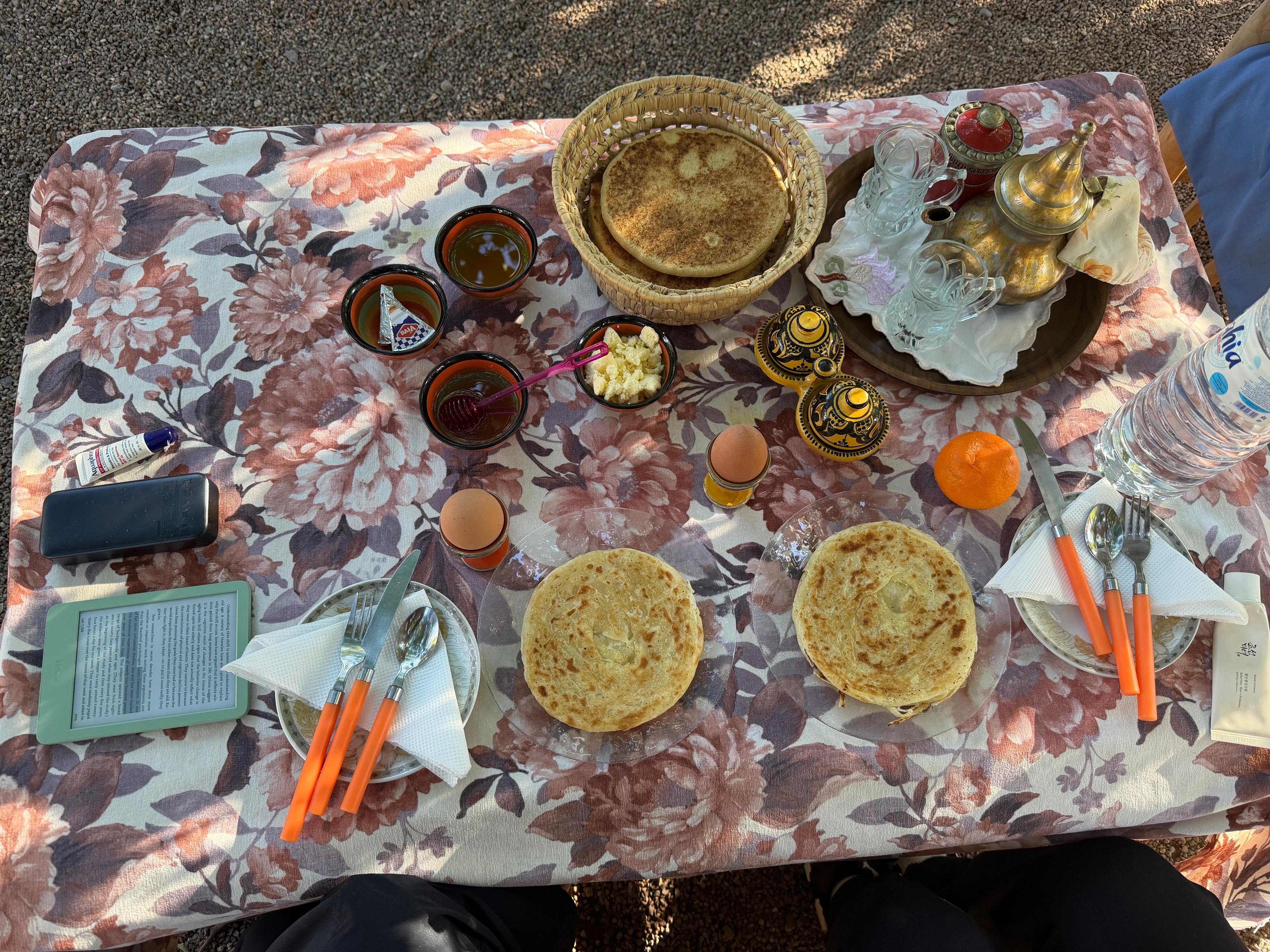
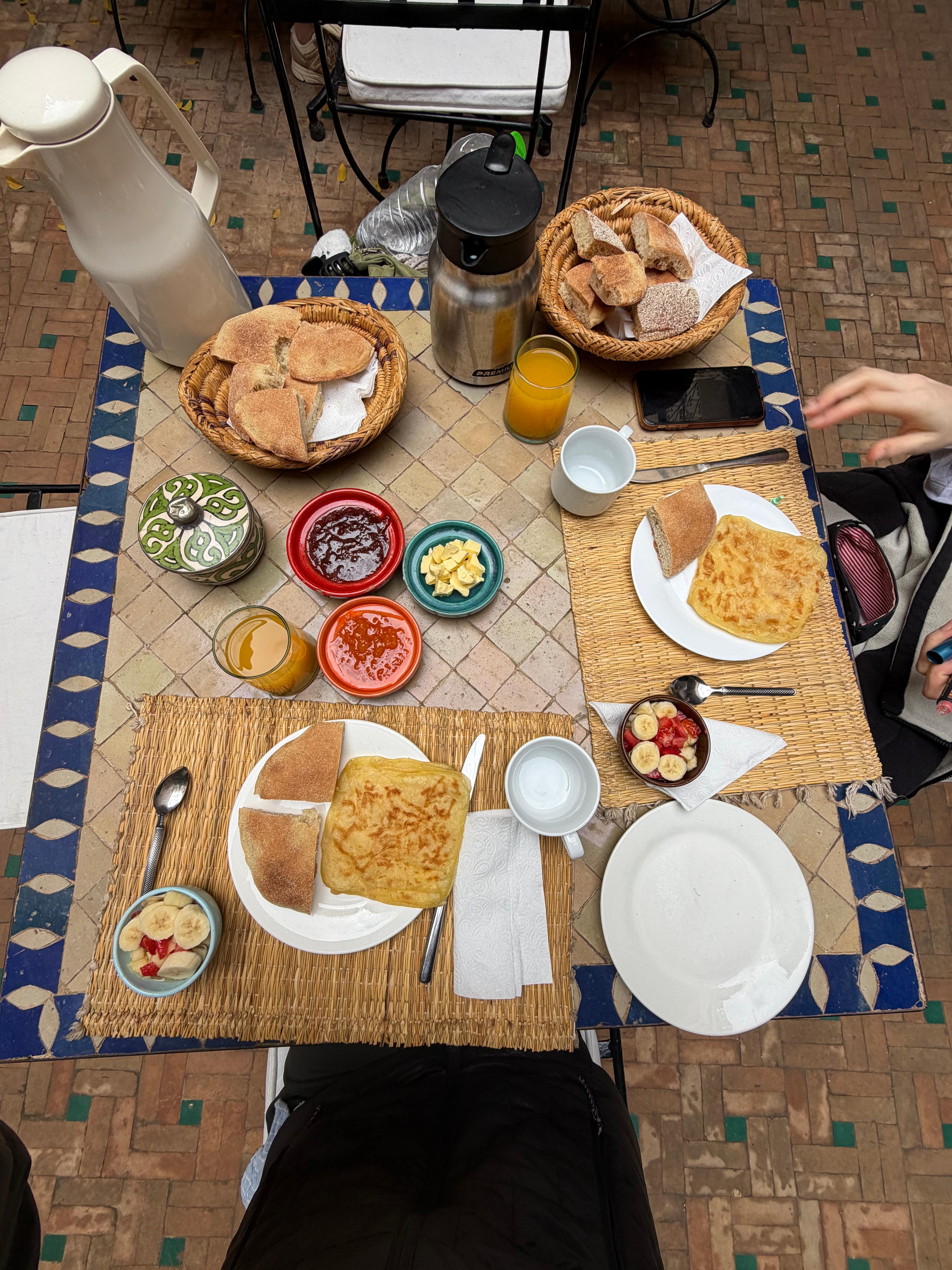
Overall, we found that Moroccon cuisine is not one of much variation. We really didn’t find much outside of these key staple dishes. Unless of course we were in a more touristic area, we found more eggs, avocado toast, French toast / fruits for breakfast. Otherwise, the breakfast we were always served at our guesthouses and could find eaten outside the home too consists of:
- Bread, usually two kinds. My favorite is msemen (AMAZING, especially when warm). This flaky flatbread is made on a griddle and has layers, similar to paratha or roti. Msemen can be found at many food stalls in the morning, along with the other type of bread, Khobz that is thicker and tastes similar to an English muffin.
- Jams, usually orange/apricot and strawberry
- Butter
- Honey
- Amlou (roasted almonds, honey, argan oil almond butter)
- Olives
- 1 pack of soft cheese
- Orange juice / Mint tea
- Sometimes a hard boiled egg

LUNCH / DINNER
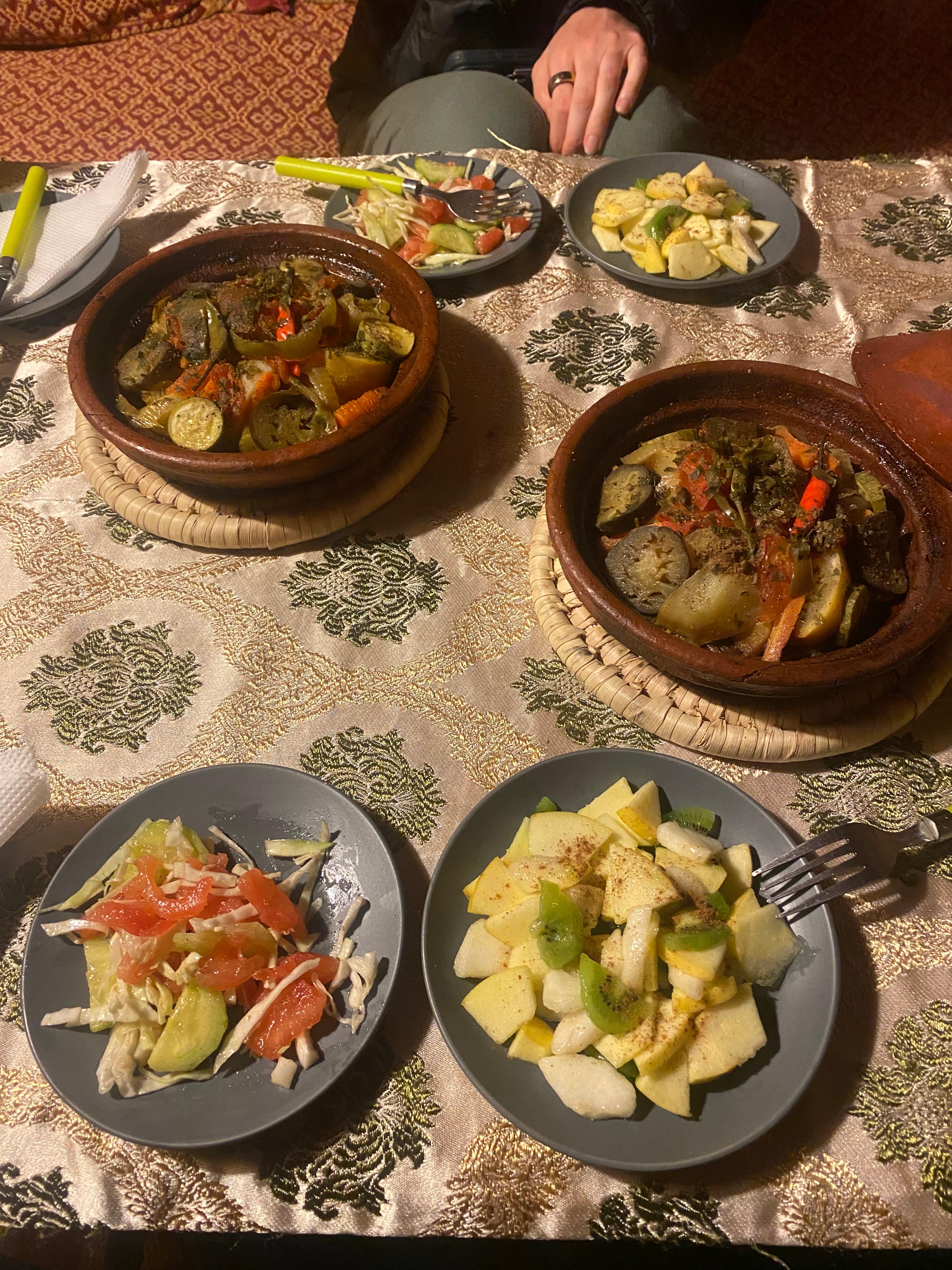
Tajine was by far the most common dish we ate in Morocco. While there are variations in types of Tajine, this dish is eaten nearly every day here from our experience. Although tajines are quite similar, no Tajine we tasted is the exact same, so it really depends on individual preparation and the spices they use. Some chicken tajines I had were okay, while others were great. They were extremely similar, but one key is getting the meat and vegetables to just the right consistency so that the meat is not overcooked and the vegetables do not get too mushy. A tajine clay pot is used to cook this dish:

Inside the clay pot, often there will be a meat (chicken tagine, beef Tajine, etc.) and vegetables. Most commonly onions, potatoes, carrots, peas, zucchini. Some additions we had were pumpkin and green beans. The spices on the dish are mild, usually seasoned with a tajine blend of cumin, paprika, ground ginger and turmeric.


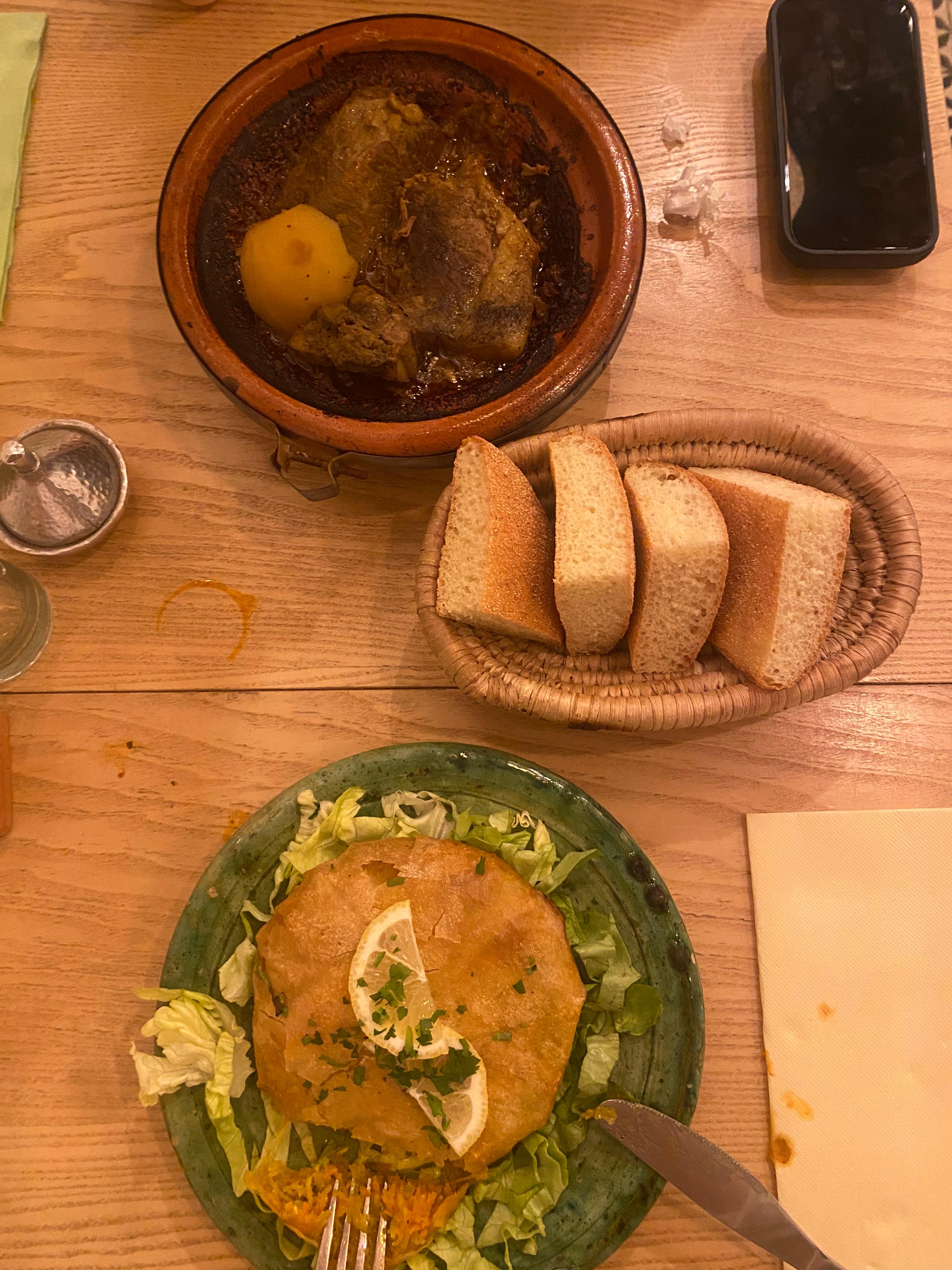
Pastilla is a savory pie made from flaky pastry, filled with a spiced meat. It’s basic, but delicious from the blend of warm spices used like cinnamon, ginger, and saffron.
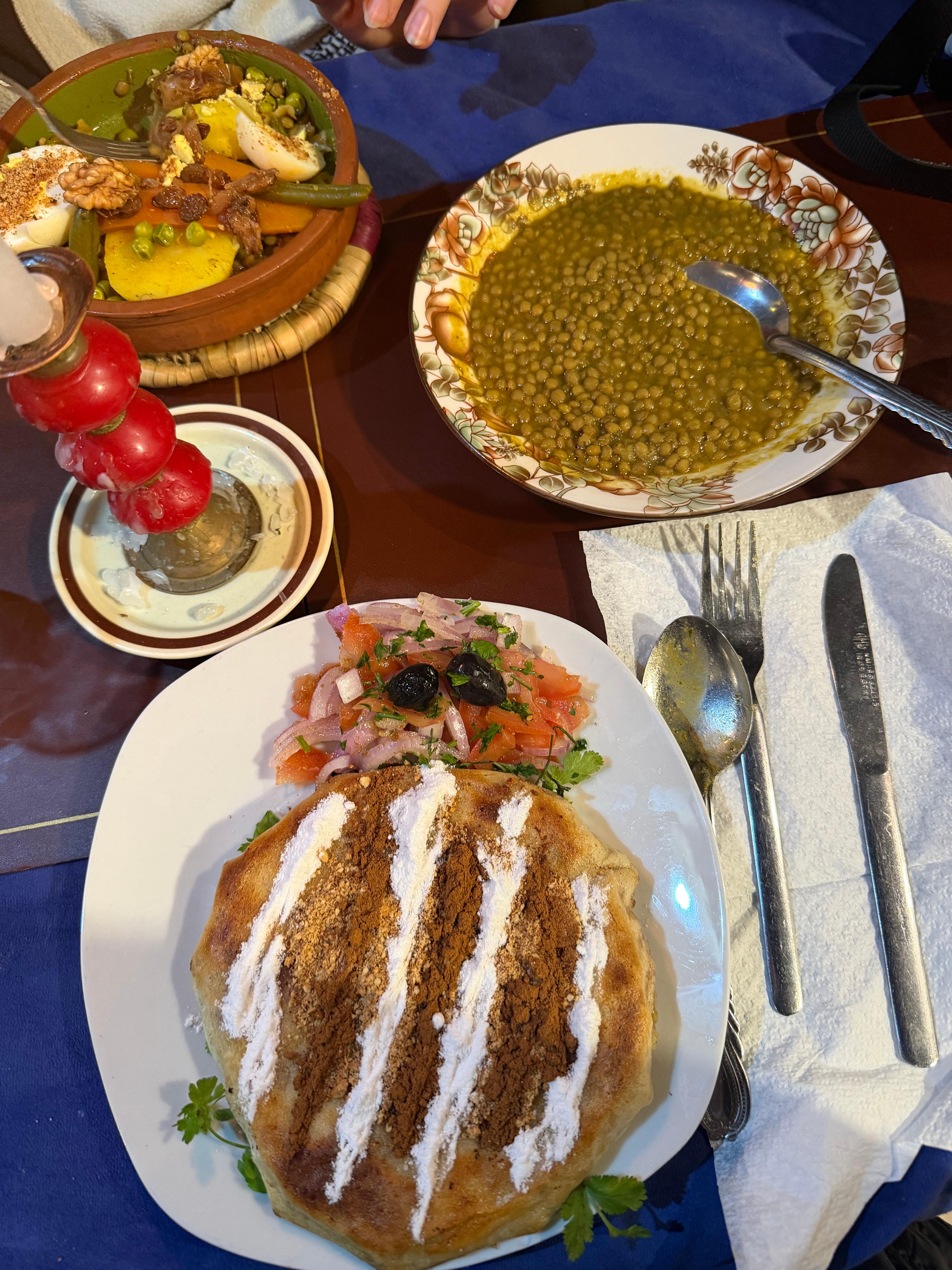
- couscous is served on Fridays, so it’s common to have Tajine the other days of the week, and Friday is the day for couscous
- We ate Harira soup often, it’s a popular soup eaten during Ramadan to break fast. It has a mild tomato based base, with lentils, chickpeas, fresh herbs, lemon, and sometimes vermicelli.
DRINKS / SNACKS
Snacks we saw everywhere were olives and dates. Helena and I both didn’t like olives before this trip, but after trying many Moroccan olives, we both came away liking them! I have to say they’re still not my favorite, but I like them a LOT more than I did, and they’re continuing to grow on me.
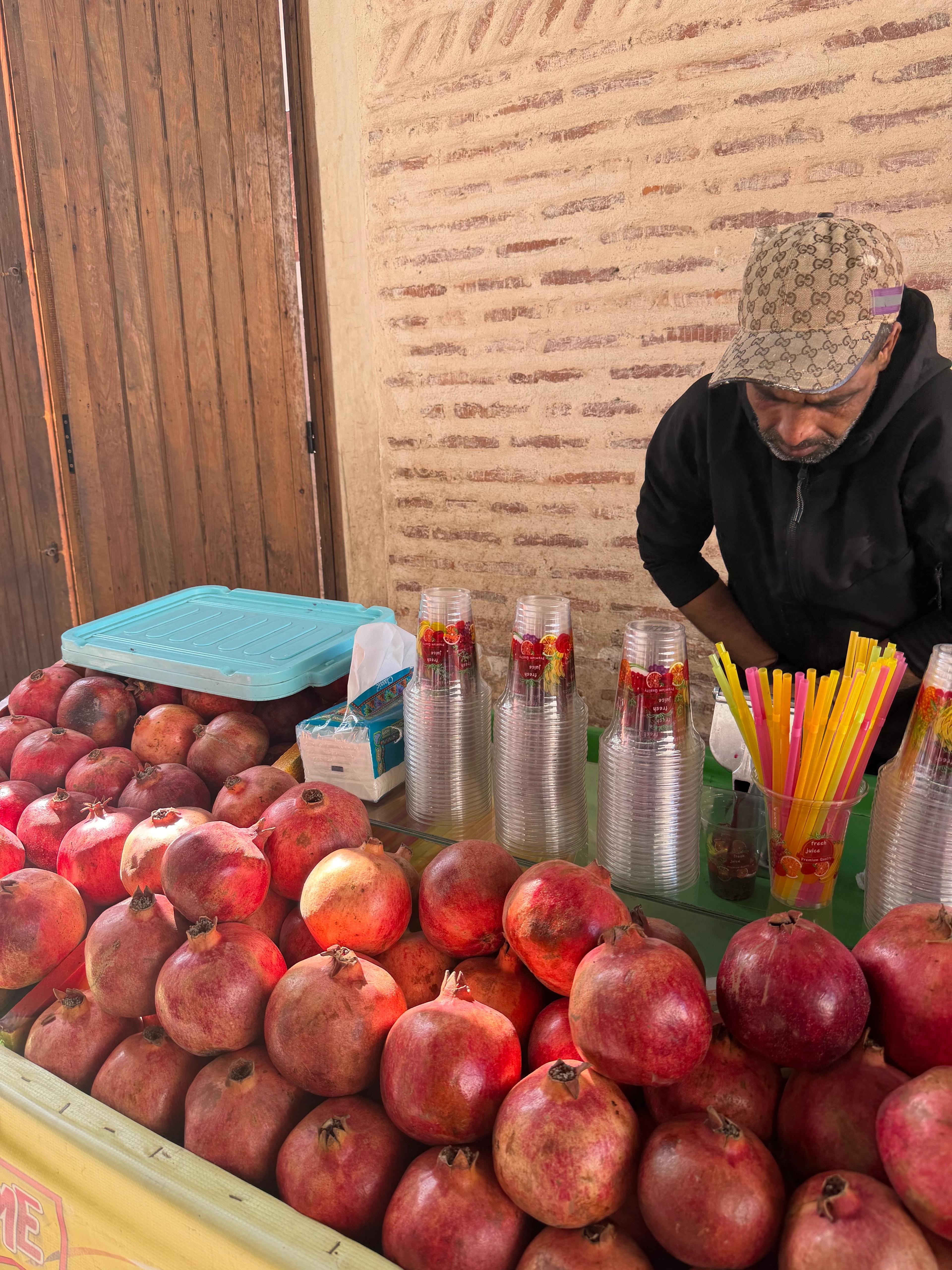
For drinks, alcohol is not very common in Morocco as 99% of the country is Muslim. The streets are instead filled with freshly squeezed juices, like sugarcane, orange, and pomegranate. The juices are deliciously fresh here, and I’m already missing it.